


Where is the Lisbon & Sintra-Cascais Natural Park?
Why should you walk the Lisbon & Sintra-Cascais Natural Park Trails?
The Lisbon & Sintra-Cascais Natural Park is located in west-central Portugal, on the Atlantic coast just west of the capital. The tour pairs the storied streets of Lisbon, one of the oldest cities in Europe, with the wild, romantic coastline and forested hills of the Sintra-Cascais Natural Park a landscape of towering sea cliffs, hidden golden beaches and ancient woodland trails that runs all the way to Cabo da Roca, the westernmost point of mainland Europe. At the heart of the region lies the enchanting town of Sintra, whose fairy-tale palaces, exotic gardens and hilltop Moorish castle, set among mist-wrapped wooded ridges, so captivated the Romantic poets and writers among them Lord Byron, who hailed it as a “glorious Eden” that they helped make Sintra a byword for beauty across 19th-century Europe. Crowning it all is the gloriously colourful Pena Palace, the vivid heart of Romantic Sintra, its red and yellow towers rising dreamlike above the treetops. In 1995 the whole landscape was designated a UNESCO World Heritage Site as the “Cultural Landscape of Sintra,” recognised as one of the finest examples of Romantic landscape design anywhere in the world.
The tour is based around three centres, the first of which is Lisbon itself a city that richly deserves a day or two of its own. Portugal’s sun-drenched capital spreads across seven hills above the River Tagus, a place of extraordinary character where Roman, Moorish and Christian pasts are written into every street. Lose yourself in the tangle of medieval lanes in the Alfama, with Fado drifting from open doorways; climb to the battlements of the hilltop Castelo de São Jorge for sweeping views over the terracotta rooftops; ride the rattling Tram 28 through the old quarters; and follow the river west to Belém, where the Manueline masterpieces of the Jerónimos Monastery and the Torre de Belém recall Portugal’s golden age of exploration. The second centre is Cascais, an elegant former fishing village and royal summer retreat on the coast, where the natural park’s clifftop trails begin in earnest. The third is Sintra itself, the enchanting hill town of palaces and forests that has drawn poets, kings and travellers for centuries. All tours begin in Lisbon, with time to explore the city on foot, before a scenic train ride along the Estoril coast carries walkers west to Cascais and the wild trails of the natural park beyond.
This isn’t a conventional inn-to-inn long-distance trail. Instead, Hillwalk Tours has handpicked the finest walking routes across the region, combining clifftop coastal paths, forested mountain trails, historic city streets, and riverside promenades that most visitors to Lisbon never get to experience. The result is a curated hiking tour that showcases the very best the capital and its wild Atlantic hinterland have to offer.
The walking itself is exceptionally varied. In Lisbon, the routes thread through the medieval lanes of the Alfama and Graça up to the Castelo de São Jorge, then follow the River Tagus west to the Manueline monuments of Belém. Due west at after Cascais, the trails turn wilder, tracing the clifftops past the Boca do Inferno blowhole and out to Cabo da Roca, the westernmost point of mainland Europe, with sea stacks, hidden beaches and 125-million-year-old dinosaur footprints preserved in the coastal rock along the way. From Sintra, the routes climb into the forested Serra de Sintra, where mist-wrapped paths lead to the moss-covered cells of the Convento dos Capuchos, the panoramic Peninha sanctuary, and trails crowned by fairy-tale palaces.
Food and culture lovers will be in their element. Most walks pass historic landmarks and tempting pastelarias, with the Belém route offering Portugal’s most famous custard tart, best eaten warm from the bakery that invented it. Along the way you can sample Sintra’s celebrated travesseiros and queijadas, taste the rare Colares wines grown in vines rooted in coastal sand, and hear the soulful strains of Fado drifting from open doorways in Lisbon’s oldest quarters. It’s a trail where the cultural experience is every bit as rich as the landscape.
When is the best time to walk the Lisbon & Sintra-Cascais Natural Park?
The walking season runs from 1st February through to 30th November. Although the tours run right through the summer, the exposed clifftop paths and the steep climbs around Sintra are at their hottest and busiest in July and August, when temperatures along the coast can climb to around 30°C and the Atlantic sun is strong, making the open, unshaded sections uncomfortable in the midday heat. That leaves two excellent windows either side of high summer.
Spring (March to May) is a wonderful time to visit. Temperatures are mild and comfortable for hiking, the Serra de Sintra is lush and green, and wildflowers are in bloom across the hillsides and clifftops. It’s also quieter than peak season, so you’ll have many of the coastal and forest trails largely to yourself.
Autumn (September to November) is arguably the most magical time on this tour. This is when the Atlantic stays warm from the summer and the crowds thin away, while the nearby Colares vineyards come alive with the grape harvest. The golden light over the coast and Sintra’s wooded ridges is at its most atmospheric, and the cooler temperatures make for ideal hiking conditions.
How long does it take to hike the Lisbon & Sintra-Cascais Natural Park?
Hillwalk Tours offers itineraries ranging from 4 days (3 nights) up to 11 days (10 nights), so you can tailor the length of your trip to suit your schedule and fitness level. The first and last days of each tour are travel days, meaning a 7-day tour includes 5 full days of hiking.
Shorter itineraries of 4 or 5 days are based around Lisbon and Sintra and focus on the classic highlights, the historic city walks, the Cascais coast, and the palaces of Sintra. Longer tours of 6 to 11 days add more time in Lisbon at the start and extend deeper into the natural park, opening up the wilder coastal trails to Cabo da Roca and the Serra de Sintra forest paths including the Convento dos Capuchos and the Peninha sanctuary. The longest itineraries also build in more rest time, allowing you to explore at a more relaxed pace with opportunities for palace visits, beach stops, and town wandering between hiking days.
Daily hiking distances are relatively short, typically 5 to 15 km, but don’t let that fool you. This is a region of coastal cliffs and forested hills: while the riverside and coastal stages are largely flat, the walks in the Serra de Sintra involve significant climbs, ranging from around 240 metres up to 640 metres on the most demanding day. Some ascents are short and sharp, while others are sustained over several kilometres, and walking times range from about 2 hours on the shortest days to 7 hours on the longest. Accommodation, breakfast, baggage transfers, route notes, GPS tracks, and 24/7 support are all included.
Tour Route
Types of Trails
Choosing the right hiking tour for you can be, at times, tricky. It is always important to consider your own physical capability and comfort levels.
At Hillwalk Tours, we have grouped each trail route we offer into categories depending on personal preference and fitness levels. For our Lisbon & Sintra-Cascais Natural Park tours, we offer two categories, Gentle and Moderate, with itineraries ranging from 4 to 11 days. Customers are also given the option to add rest days where they see fit.
Our Gentle hikes are perfectly suited to those who would consider themselves part-time hikers those who enjoy taking photos, exploring the palaces and historic sights, and soaking in the spectacular Lisbon & Sintra-Cascais Natural Park scenery over a long lunch. Our Moderate hikes will suit people who are used to regular exercise and appreciate the chance to cover plenty of ground each day without going beyond their limits.
It’s worth noting that while daily distances are relatively short (typically 8–15 km), this is a region of dramatic Atlantic cliffs and forested hills. Many routes involve significant climbs of 200 to 500 metres, some short and sharp, others sustained over several kilometres. There are also exposed clifftop paths and some high, open sections around Sintra, so we recommend this tour for hikers who are reasonably fit, comfortable with varied gradients, and happy walking near exposed edges.
Each of these hiking categories covers the following average hiking distance and time each day:
Gentle: 15 km or 9.5 miles and between 4–6 hours per day
Moderate: 20 km or 12.5 miles and between 5–7 hours per day
Hillwalk Tours Guide Notes
If you decide to walk the trail with Hillwalk Tours, you will receive a detailed walking pack once you have fully booked your hiking holiday. This walking pack will include detailed route notes and walking directions written and constantly updated by our route development team. By personally walking each trail and creating our own detailed route notes, it allows us to provide more itineraries, route options and alternatives than what you will typically find across generic guidebooks. You will also receive GPS tracks via a leading GPS navigation app, meaning you will never have to worry about getting lost.
The walking pack also includes local tips on the best places to eat and drink, historical and cultural information to enrich your walk, and alternative route options offering scenic detours and hidden gems along the way.
Starting and Finishing Points
Depending on the itinerary you choose, your tour will either begin in the vibrant capital city of Lisbon or directly in the coastal town of Cascais, on the edge of the Sintra-Cascais Natural Park. Longer itineraries begin with time exploring Lisbon, one of Europe’s oldest and most captivating cities, famous for its azulejo-tiled buildings, the hilltop Castelo de São Jorge, its thriving food scene, and the Manueline monuments of Belém. Shorter itineraries can start straight from Cascais, getting you onto the coastal trails right away.
All tours finish in the enchanting hilltop town of Sintra, a UNESCO World Heritage Site and one of Portugal’s most beautiful destinations. From Sintra, regular train and bus services connect you to Lisbon, its airport, and other major towns, and a private transfer can also be arranged. Several of the daily hikes also include short taxi transfers between sections, and if you find yourself unable to complete a stage on any given day due to the heat or terrain, local taxi partners are available along the route.
Many itineraries include a scenic train journey from Lisbon along the Estoril coast to Cascais, running right beside the Atlantic shoreline, where the walking through the natural park begins in earnest, a relaxing and memorable start to the trip.
Sample Lisbon & Sintra-Cascais Natural Park Itineraries
The following are examples of Hillwalk Tours Gentle and Moderate itineraries for hiking the Lisbon & Sintra-Cascais Natural Park .
Gentle 9-Day
Day 1: Arrival in Lisbon
Day 2: Lisbon’s Ancient Heart Graça, Alfama & São Jorge Castle🏰 ( 3 Miles / 5 Km)
Day 3: Historic Riverside Walk – from the Heart of Lisbon to Belém Tower (7 Miles / 11 Km)
Day 4: Cascais – Azóia (8 Miles / 13 Km)
Day 5: Cabo Roca – Praia Grande (8 Miles / 13 Km)
Day 6: Convento dos Capuchos – Sintra (via Palácio de Monserrate) (6 Miles / 10 Km)
Day 7: Sintra – Palaces, Gardens & the Western Hills ( 3 Miles / 5 Km)
Day 8: Sintra – Pena Palace & Park and the Moorish Castle (6 Miles / 10 Km)
Day 9: Depart Sintra
8-Day / 7-Night Moderate
Day 1: Arrival in Lisbon (Optional: Lisbon’s Ancient Heart)
Day 2: Historic Riverside Walk – from the Heart of Lisbon to Belém Tower ( 7 Miles / 11 Km)
Day 3: Cascais – Azóia ( 8 Miles / 13 Km)
Day 4: Serra de Sintra Trails (via Convento dos Capuchos) ( 8.5 Miles / 14 Km)
Day 5: Azóia – Cabo da Roca to Praia Grande ( 8.5 Miles / 14 Km)
Day 6: Colares – Sintra (via Convento dos Capuchos & Palácio de Monserrate) ( 9 Miles / 14.5 Km)
Day 7: Sintra – Pena Palace & Park and the Moorish Castle ( 6 Miles / 10 Km)
Day 8: Depart Sintra
Currency and Expenses
The currency used along the Lisbon & Sintra-Cascais Natural Park , as in the rest of Portugal, is the Euro (€).
The cost of food, drinks, and activities while walking the Lisbon & Sintra-Cascais Natural Park can vary depending on factors such as location, time of year, and personal preferences.
Dining out along the Lisbon & Sintra-Cascais Natural Park offers a range of options, from budget-friendly menus to more upscale dining experiences. A typical menu, which includes a starter, main course, dessert, and often wine or water, generally costs between €10 and €25. Mid-range restaurant meals can range from €30 to €50 per person, excluding drinks. If you opt for finer dining, prices will be higher. Beverages such as a glass of wine or a beer usually cost between €3 and €5, though prices may be slightly higher in larger cities or popular tourist areas.
The Lisbon & Sintra-Cascais Natural Park offers a variety of experiences, including visiting historic palaces, exploring the old quarters of Lisbon, and taking part in cultural activities. Some attractions, like the Sintra palaces and museums, may have entrance fees, while some churches operate on donations. Costs for these activities can vary and prices may be slightly higher in peak season, which typically runs from April to October, compared to the quieter winter months.
Lisbon & Sintra-Cascais Natural Park Accommodation and Services
Your Two Bases
The Lisbon & Sintra-Cascais Natural Park tour is structured around two carefully chosen bases, each offering a distinct perspective on the region.
Hotels and Guesthouses
Hillwalk Tours books high-quality, well-reviewed accommodation throughout the tour, primarily in traditional guesthouses and small hotels. Many of these have been personally visited and approved by the Hillwalk Tours team. In the Lisbon & Sintra-Cascais Natural Park, several guesthouses and hotels also feature terraces and pools where you can relax in the sunshine or cool down after a day on the trails. You can expect comfortable en-suite bedrooms (where available), a generous breakfast each morning, and a warm, friendly welcome from your hosts.
Due to the nature of the region, accommodation in some locations may require a short transfer to or from the trail start or end point, or you may stay in the same accommodation for more than one night to cover multiple walking days. For food in Lisbon, the Time Out Market opposite Cais do Sodré station is well worth a visit a lively food hall bringing together some of the city’s best chefs, restaurants and producers under one roof. The cost of any transfers is included in your tour price.
Shops and Grocery Stores
The towns and villages along the tour have grocery stores, bakeries, and small markets where you can buy food, snacks, and other essentials. Lisbon, Cascais and Sintra all have a range of shops and places to eat. In smaller villages along the walking routes, options may be more limited, so it’s worth carrying water and snacks with you on hiking days. Your Hillwalk Tours walking pack includes tips on the best places to eat and drink at each stop.
ATMs
ATMs are available in Cascais and Sintra, as well as in Lisbon if your itinerary starts there. In smaller villages along the walking routes, access to cash machines may be limited. Credit and debit cards are increasingly accepted across Portugal, but some smaller businesses, local shops, accommodation providers selling packed lunches, or taxis, may only take cash. It’s a good idea to withdraw sufficient cash in the larger towns and carry some with you as a backup.
Lisbon & Sintra-Cascais Natural Park Trail Etiquette
The Lisbon & Sintra-Cascais Natural Park is a living, working landscape where local communities have fished the coast and cared for the forests and gardens of the Serra de Sintra for centuries. The people who live and work here take great pride in their heritage and in caring for the natural environment around them. To keep this region special for everyone who visits, it’s important to respect the trails and travel responsibly.
Walkers are encouraged to follow proper trail etiquette and embrace the principles of Leave No Trace. Don’t leave any rubbish behind, carry everything with you until you find a proper bin. Stay on marked paths, particularly along the clifftop sections and through the forest trails of the Serra de Sintra, where the terrain is sensitive and erosion can be a problem.
Hillwalk Tours Lisbon & Sintra-Cascais Natural Park Map
Lisbon & Sintra-Cascais Natural Park Terrain
Waymarking
The walking routes on the Lisbon & Sintra-Cascais Natural Park tour follow a mix of city streets, coastal paths, forest trails, and established local hiking routes. Some sections, such as the marked trails within the Sintra-Cascais Natural Park and the well-trodden coastal paths, are clearly waymarked with trail signage. Other routes follow Lisbon’s cobbled lanes, clifftop tracks, and quiet forest and rural roads where formal waymarking may be less frequent or absent altogether.
This is where the Hillwalk Tours walking pack really comes into its own. You’ll have detailed turn-by-turn directions and route notes along with GPS tracks via a smartphone app, so you’ll always know exactly where you are and where you’re heading even on the quieter stretches where signage is sparse. The walking pack also includes local information and history for points of interest you’ll pass, as well as alternative route options and scenic detours.
Difficulty
The Lisbon & Sintra-Cascais Natural Park is best described as a moderate hiking tour. While daily distances are relatively short typically 8 to 15 km the region combines dramatic Atlantic clifftops with the forested hills of the Serra de Sintra, and the terrain reflects that character. Many routes involve significant climbs of 200 to 500 metres, with some ascents short and sharp and others sustained over several kilometres. Shade can be limited on exposed sections, particularly along the open clifftops and coastal paths, so the heat is an additional factor to consider during warmer months.
The trails themselves follow a varied mix of cobbled city streets, coastal and clifftop tracks, forest paths, sandy beaches, and some quiet surfaced roads through villages. The terrain is generally good but can be uneven in places, particularly on older cobbled lanes and the rockier coastal and forest paths. Some sections run close to exposed clifftop edges, and the climbs around Sintra such as the steep ascent to Pena Palace and the Moorish Castle can be steep and a little rugged in places.
The tour is offered at two grading levels Gentle and Moderate to suit different fitness levels and preferences. Hillwalk Tours personally walks these trails and creates custom itineraries to suit all walkers, but we recommend this tour for hikers who are reasonably fit, comfortable with varied gradients, and happy walking near exposed edges. If you do find a particular day’s walk too demanding, local taxi partners are available along the route who can help get you to your destination.
Lisbon & Sintra-Cascais Natural Park Sights & Attractions
Lisbon
Lisbon rises across seven hills above the River Tagus, one of the oldest cities in Europe, its medieval alleys, hilltop castle and tiled façades giving it a character all its own. The grand riverside square of Praça do Comércio opens onto the water from which Portugal’s great navigators once set sail. Wander the steep cobbled lanes of the Alfama, ride the rattling Tram 28, climb to the battlements of Castelo de São Jorge, and follow the river west to the Manueline monuments of Belém. With a thriving food scene, lively markets, soulful Fado and sweeping miradouro views, Lisbon is a city that rewards an extra day of exploration before you head to the coast.

Praça Dom Pedro IV, Lisbon in the cool of the evening
Lisbon
Portugal’s capital rises across seven hills above the River Tagus one of the oldest cities in Europe and a place where centuries of history are woven into everyday life. Wander the medieval lanes of the Alfama, the city’s oldest quarter, where if you are lucky you might hear Fado drifting from open doorways and climb to the battlements of the hilltop Castelo de São Jorge for sweeping views over the terracotta rooftops. Ride the rattling Tram 28, pause at the miradouros (scenic view points) and lose yourself in the bustling bars and lively cafés of the Baixa and Bairro Alto. With its food scene, history and atmosphere, Lisbon rewards an extra day of exploration before you head to the coast.
Belém: Jerónimos Monastery & Belém Tower
At the western edge of Lisbon, the riverside district of Belém holds two of Portugal’s greatest monuments, both UNESCO World Heritage Sites. The soaring cloisters of the Jerónimos Monastery and the ornate Torre de Belém, rising from the Tagus, are masterpieces of the Manueline style and mark the point from which the great navigators set sail during the Age of Discovery. No visit is complete without a warm pastel de nata from the famous bakery that invented it, just along the street.

Belém Tower
Cascais
Once a fishing village and royal summer retreat, Cascais is now an elegant resort town and the gateway to the natural park’s wild coastline. Just west of the centre, the Boca do Inferno, or “Mouth of Hell,” is a dramatic chasm carved into the limestone cliffs where, on a big swell, the Atlantic surges in with a thunderous roar and shoots spray high into the air. The town’s marina, cobbled lanes, seafood restaurants and the Santa Marta lighthouse make it a lovely place to linger.

Cascais town beach.
Boca do Inferno
Just west of Cascais, the Boca do Inferno, the “Mouth of Hell,” is one of the most dramatic sights on the coast, a yawning chasm carved into the limestone cliffs where the Atlantic surges in through a collapsed sea arch. On a big swell the water booms and churns far below, sending spray high into the air with a thunderous roar that gives the spot its name. Railed pathways and viewpoints let you peer right down into the foaming cauldron, and the clifftop trails leading to and from it are among the most spectacular walking of the entire trip.

Boca do Inferno
Cabo da Roca
At the western edge of the natural park, Cabo da Roca is one of the most dramatic sights on the coast the westernmost point of mainland Europe, where sheer cliffs drop more than a hundred metres to the crashing Atlantic below. A lighthouse and a tall stone monument, crowned with a cross, mark the spot, its plaque inscribed with the words of the poet Camões: this is the place “where the land ends and the sea begins,” where for centuries people believed the known world came to an end. The wild clifftop trails approaching the cape pass a chain of weathered coastal forts and lighthouses, making this one of the most spectacular stretches of walking on the entire trip.

Cabo da Roca Lighthouse
The Atlantic Coast: Praia da Adraga to Praia Grande
North of Cabo da Roca, the coast unfolds in a succession of dramatic clifftops, sea stacks and hidden coves. The secluded Praia da Adraga and the broad sands of Praia Grande are among the finest beaches on the route, and the cliffs at Praia Grande even preserve fossilised dinosaur footprints in the rock. It’s a stretch of genuinely wild coastline, with the full drama of the Atlantic always in view.
Pena Palace & Park
Rising above the treetops on a rocky crag above Sintra, Pena Palace is one of the most extraordinary royal residences in Europe and a UNESCO World Heritage landmark. A riot of vivid reds and yellows, domes and battlements, this Romantic 19th-century fantasy is surrounded by a vast, exotic park of winding paths, hidden follies and trees gathered from across the world. It is the unmissable centrepiece of any visit to Sintra.

Pena Palace rising above the forested Serra de Sintra
Castelo dos Mouros (The Moorish Castle)
Strung along a rocky ridge above Sintra, the ancient battlements of the Castelo dos Mouros date back to the period of Moorish rule and offer some of the finest panoramic views in the region. The Moorish Castle is a 10th century fortification founded in the the period when the Moors occupied the Iberian Peninsula. From the walls, the serra’s forested ridges roll away on one side and the glittering Atlantic stretches out on the other, with Pena Palace crowning the neighbouring peak. The climb up and along the ramparts is a highlight in its own right as you are rewarded with a spectacular view.

Castelo dos Mouros (the Moorish Castle)
Quinta da Regaleira
This enigmatic estate on the edge of Sintra is a labyrinth of romantic gardens, grottoes, towers and tunnels created by an eccentric millionaire in the early 20th century. Its most famous feature is the Initiation Well, a spiralling subterranean staircase that descends deep into the earth said to have been used for Masonic initiation ceremonies and steeped in Templar and alchemical symbolism. Few places capture the dreamlike, otherworldly atmosphere of Sintra quite so completely.

Let the initiation begin, Hauke of Hillwalk Tours at the famous well in the Quinta da Regaleira
Monserrate Palace
A short distance from the centre of Sintra, the Palácio de Monserrate is an exotic Moorish-Gothic palace set among some of the most beautiful gardens in the country. Lush and subtropical, the grounds gather plants from around the world into a romantic landscape of lawns, ferns, waterfalls and ruins. It’s a serene and atmospheric counterpoint to the grander palaces above the town.

Palácio palace de Monserrate
Sintra Town, Pastries & Colares Wine
The historic centre of Sintra, a UNESCO World Heritage town, is a delight to explore on foot, gathered beneath the twin conical chimneys of the Palácio Nacional de Sintra. Be sure to sample the town’s celebrated pastries the soft almond travesseiros and the cinnamon-dusted queijadas de Sintra in one of its traditional bakeries. Nearby, the historic Colares wine region produces distinctive wines from ungrafted vines rooted in coastal sand, one of the oldest and most unusual winemaking traditions in Portugal.

Palácio Nacional de Sintra
Santuário da Peninha
Perched at around 490 metres on the high ground of the Serra de Sintra, the Santuário da Peninha is a chapel and hilltop retreat commanding one of the most panoramic views in the natural park from Cabo da Roca along the coast to Cascais. The steep climb to reach it is well rewarded with 360-degree views over the serra and the Atlantic, and it makes a memorable waypoint on the loop through the heart of the mountains.

High above the coast at the Santuário da Peninha one of the most panoramic spots in the natural park.
Lisbon & Sintra-Cascais Natural Park Wildlife
The Lisbon & Sintra Cascais Natural Park passes through a rich mosaic of habitats, from the steep Atlantic clifftops and coastal dunes around Cascais and Cabo da Roca to the lush forested slopes and woodland of the Serra de Sintra. Each of these landscapes supports its own distinctive wildlife.

Bonelli’s eagle is one of Europe’s rarest raptors and you may spot them soaring along the cliffs and over the wooded hills of the Serra de Sintra.
Birds of prey are one of the highlights of walking in this region. Keep your eyes on the skies and you may spot kestrels, buzzards, and peregrine falcons soaring above the cliffs on the thermals that rise from the sun-warmed coast. Along the shoreline and in the wooded valleys of the serra, you’ll also find seabirds and a variety of smaller bird species. The more remote sections of the trail, particularly around Cabo da Roca and the quiet paths of the Serra de Sintra, are especially rewarding for birdwatchers.

The Occellated Lizard (Photo credit: Frank Vassen) is Europe’s largest lizard and you may spot them in warm, scrubby or stonewalled habitats.
On the ground, the natural park is home to wild boar, foxes, and various small mammals, though most are elusive and tend to keep their distance from walkers. Lizards are a common sight throughout the tour, particularly on warm stone walls and sunny stretches of trail during the spring and autumn months.

Cascais’s flora
The flora along the route is equally varied and reflects the region’s dual character as both a romantic cultural landscape and a place of wild natural beauty. The exposed headlands and dunes around Cascais and Guincho are dominated by hardy coastal scrub and dune plants, shaped over centuries by the salt wind off the Atlantic. As the trail climbs into the Serra de Sintra, the vegetation shifts to lush mixed woodland, cork oak, and Mediterranean scrubland, sustained by the hills’ cool, damp microclimate. The romantic parks and gardens of Sintra wind through a particularly rich landscape of ferns, exotic trees, and plants gathered from across the world. In spring, wildflowers bloom across the hillsides and clifftops, adding splashes of colour to the already dramatic scenery.
It is important for walkers to respect these habitats and the wildlife within them. Stay on marked paths, particularly along the clifftops and through the forest trails of the Serra de Sintra, which are carefully protected, and avoid disturbing nesting sites or animals you encounter along the way.
History of Lisbon & Sintra-Cascais Natural Park
The Lisbon & Sintra-Cascais region’s story begins deep in the past. Lisbon is one of the oldest cities in Europe, settled in turn by Phoenicians, Romans, Visigoths and Moors, while the Serra de Sintra was known to the ancient world as the “Mountain of the Moon,” a place of myth and pilgrimage. For centuries these hills and shores were shaped by the peoples who settled, farmed and worshipped here, generation after generation.
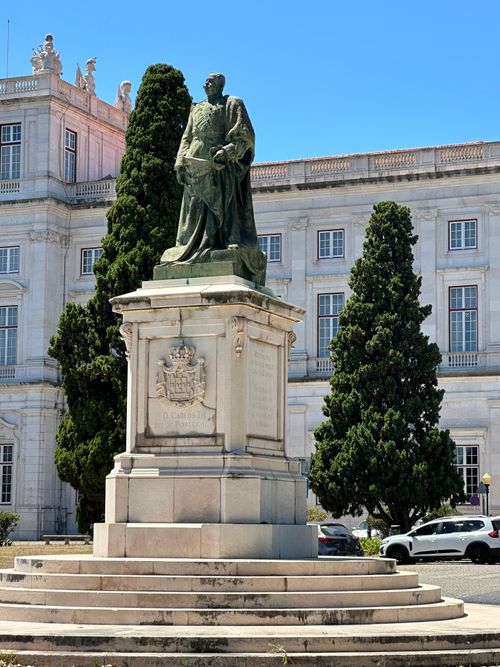
Statue of Marquis de Pombal
Then in 1755 something remarkable happened. One of the most powerful earthquakes ever recorded struck Lisbon, followed by a tsunami and fires that destroyed much of the medieval city. The reconstruction that followed, masterminded by the Marquis of Pombal, created the elegant grid-planned Baixa and pioneered some of the first earthquake-resistant buildings in history, a bold and rational response to catastrophe that shaped the modern city we see today.

Praca do Comercio
The arrival of the railway in the late 19th century transformed access to the region. The new coastal line carried Lisbon’s royal court and high society out to Cascais, turning a quiet fishing village into a fashionable seaside resort, while another line opened up the hills of Sintra. That same coastal railway remains a scenic journey today and is the route Hillwalk Tours walkers take from Lisbon to the edge of the natural park.

Fingers on the frets: a Portuguese guitar in a Lisbon fado performance.
In 1995 the Cultural Landscape of Sintra was designated a UNESCO World Heritage Site in recognition of its outstanding beauty. The fairy-tale palaces, romantic gardens, ancient Moorish castle and forested hills were acknowledged as one of the finest examples of Romantic landscape design anywhere on earth.
Despite the fame of its palaces, much of this region is best discovered on foot. While Sintra’s headline sights draw visitors from around the world, the network of trails through the natural park the wild Atlantic clifftops, hidden beaches and quiet forest paths of the Serra de Sintra remains far less explored and known mainly to locals. Hillwalk Tours‘ Lisbon & Sintra-Cascais walking routes open up this quieter side of the landscape, a whole new way to experience one of Europe’s most enchanting corners.
Did you know?
At the wild, windswept headland of Cabo da Roca, you’ll be standing at the westernmost point of mainland Europe the very edge of the continent, where sheer cliffs plunge some 140 metres to the Atlantic below. For centuries, before the Age of Discovery, people believed this was the end of the known world, with nothing but open ocean stretching beyond the horizon. The great Portuguese poet Luís de Camões captured it perfectly, describing the spot as the place “where the land ends and the sea begins.” Today a stone monument and a historic lighthouse mark the cape, and you can even pick up a certificate confirming you’ve reached Europe’s most westerly point. Few places on the tour feel quite so dramatic and reaching it on foot, along the clifftop trails, makes the moment all the more memorable.
Roman History
The Romans left a deep mark on this corner of Portugal. Lisbon was one of their most important cities in the west, known as Olisipo, and was granted special status by Julius Caesar himself as Felicitas Julia Olisipo. From here, Roman roads radiated out across the region, connecting the city to the rest of the empire and carrying troops, trade and travellers through the very landscape you’ll be walking today.
The Romans understood the strategic and agricultural value of this coast and its hinterland. Beneath the streets of Lisbon you can still visit the remains of the Roman Theatre in the Alfama, built in the first century, and the mysterious Roman Galleries hidden under the Baixa. Along the coast towards Cascais, archaeologists have uncovered Roman villas and the stone tanks once used to salt fish and produce garum the prized fish sauce, made from fermented fish guts, that was traded right across the empire. Reminders of Rome are woven quietly into the landscape you cross.
Perhaps the most enduring Roman legacy of all lies in a name. The Serra de Sintra was known to the ancient world as Mons Lunae, the “Mountain of the Moon,” a place sacred to the moon goddess the Romans called Cynthia and it is from her that the name Sintra is said to derive. These hills have drawn people for worship, retreat and wonder for thousands of years. The palaces and the trails came later, but the sense of magic the Romans felt here is something you’ll still feel on the walk today.
Calçada Portuguesa: The Legend of the Rhino and the Pavement
Across Portugal, streets and squares are paved with calçada portuguesa, the black-and-white stone mosaic that has become one of the country’s most recognisable features. One popular legend traces its origins to 1515, when King Manuel I received a rhinoceros as a gift from India the first seen in Europe since Roman times. According to the story, merchants in Lisbon paved a stretch of street at their own expense so the animal could be paraded through the city without wading through mud.
Historians note that streets in cities like Lisbon were already being repaved around this period regardless, driven by the heavy trade traffic of the Age of Discoveries. Dirt roads caused mud in winter and dust in summer, prompting paving work independent of the rhino’s visit. The timing overlap between the two events is likely coincidental, though it has endured as one of the best-known urban legends associated with the tradition. The rhino itself, named Ganda, never completed its onward journey — the ship carrying it sank in the Mediterranean shortly after leaving Portugal.
The black-and-white pavement style seen today became especially widespread after the 1755 Lisbon earthquake, when much of the city was rebuilt and the pattern was adopted partly for drainage and sanitation purposes.
The craft is practiced by calceteiros, skilled pavement layers who hand-cut and place small limestone and basalt cubes to form each design. Some archives hold around 9,000 historic pavement patterns, some dating to the late 19th century. The profession is currently in decline due to low pay and difficulty attracting younger workers, and some craftsmen now travel abroad — including to Brazil to train new pavers and help preserve the technique.

Origin of Portugal’s pavement art: calçada portuguesa.
The People and Local Customs
Life across the Lisbon & Sintra-Cascais region moves to two very different rhythms. In the capital there is the energy of a great Atlantic city, while out along the coast and up in the hills of Sintra, time slows to the gentler pace of fishing harbours and old villages. Wherever you go, traditions have been passed down through families for generations, and the people who live here are proud of their corner of Portugal and genuinely happy to share it with visitors.
Portuguese hospitality is famously warm and unhurried, and you’ll feel it everywhere on this tour. Don’t be surprised if a café owner insists you try a glass of something local, or a freshly baked pastel de nata the famous Portuguese custard tart, a flaky pastry case filled with rich egg custard, caramelised on top and best eaten warm with a dusting of cinnamon before you head back out. In Sintra the old traditions are still very much alive. The town’s pastry shops bake the soft almond travesseiros and the cinnamon-dusted queijadas de Sintra using recipes that have barely changed in centuries, and you’ll see them in every bakery window. Sintra is equally proud of the nearby Colares wines, made from rare vines grown in the coastal sand, a tradition you can taste at the local cellars.
Along the coast, the sea has shaped a way of life for centuries. Cascais began as a humble fishing village, and although it is now an elegant resort, fishermen still land their catch and the rhythms of the ocean run deep. Inland, the small growers of the Colares wine region tend some of the oldest vines in Portugal ungrafted survivors rooted in coastal sand that escaped the blight which once devastated Europe’s vineyards and you can even stop at a famous local quinta (wine estate) along the route to taste them straight from the source.
The region is also celebrated for its food. Along the coast, fresh Atlantic seafood is the star, from grilled sardines and seafood rice to the salt cod, or bacalhau, that Portugal prepares in a hundred different ways, while Lisbon and Sintra add their own pastries, cheeses and regional wines. After a day on the trails, taking the time to sit down for a long lunch by the sea or in a shaded Sintra courtyard is not an interruption to the hiking. It is very much part of the experience.
Music and Song
Lisbon and its surrounding region lie at the very heart of Portugal’s musical identity. Fado, the sound most associated with the country, was born here in the working-class quarters of the city, and you’ll hear it drifting from the restaurants and bars of the Alfama and Bairro Alto. Often described as the soul of Portuguese music, Fado expresses themes of longing, memory and a bittersweet attachment to place saudade. It is the kind of music that makes a lot more sense after a few days here, when you understand why people find this corner of Portugal so hard to leave.
Fado has its own unmistakable sound, carried by the guitarra portuguesa, the pear-shaped twelve-string guitar whose shimmering notes wind around the singer’s voice. Beyond the fado houses, the region’s saints’ days and festivals are still celebrated with processions, music and dancing, especially in early summer. The greatest of these are the Festas de Lisboa each June, when the city honours its patron Saint Anthony with colourful neighbourhood parades the marchas populares and lively street parties in the Alfama and Graça that fill the old quarters with grilled sardines, music and dancing late into the night.
Lisbon itself has a thriving live music scene that goes well beyond Fado. The city’s creative energy is part of what makes it such a compelling place to spend a day or two before heading to the coast. From intimate Fado houses in the Alfama to jazz clubs, riverside venues and rooftop bars, there is no shortage of ways to ease into the rhythm of Portugal before you hit the trail.
Lisbon & Sintra-Cascais Natural Park in Pop Culture
Film and TV
Film and TV
The Ninth Gate and the Connection to Sintra
Roman Polanski’s 1999 supernatural thriller The Ninth Gate, starring Johnny Depp as a rare-book dealer hunting a manuscript said to summon the Devil, was filmed in part at Chalet Biester (Biester Palace) in Sintra, used as the mansion of book collector Victor Fargas. With its dark, turreted roofline rising from the forest on the road up to Pena Palace, the neo-Gothic mansion was the perfect setting for the film’s brooding atmosphere. Long closed, the palace finally opened to visitors in 2022, and you’ll pass it on the Sintra leg of your tour a small room inside even screens scenes shot on location.

The Ninth Gate
Lisbon Story
This 1994 film by the acclaimed German director Wim Wenders is a love letter to Lisbon, following a sound engineer who wanders the city recording its everyday noises while searching for a missing filmmaker friend. With a haunting soundtrack by the Portuguese band Madredeus, it captures the light, the trams, the tiled streets and the gentle melancholy of the city like few other films. It is one of the loveliest visual introductions to Lisbon and sets the mood perfectly for the days you’ll spend exploring it on foot.
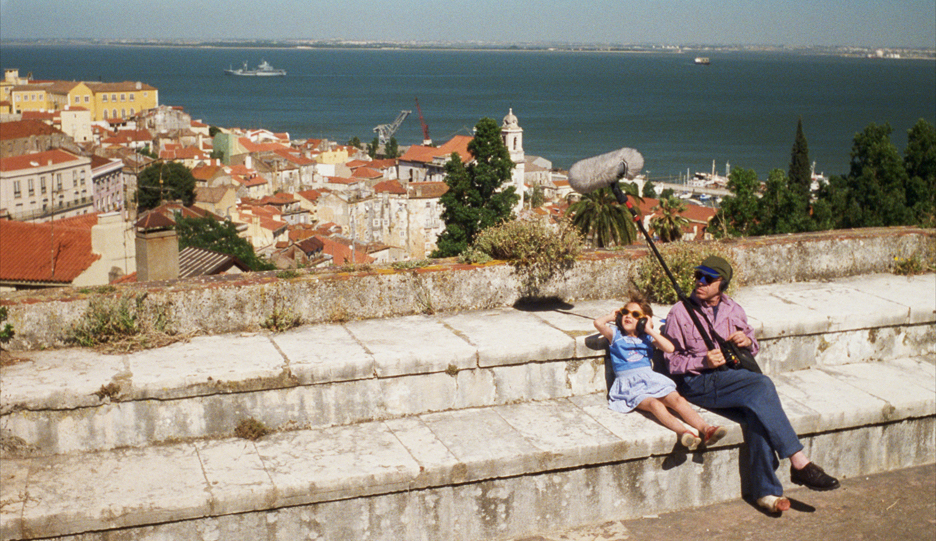
Lisbon Story
James Bond and Casino Royale
Cascais and neighbouring Estoril hold a special place in spy history. During the Second World War the glamorous Casino Estoril was a notorious gathering point for spies, dispossessed royals and wartime adventurers, and it became the inspiration for Ian Fleming’s first James Bond novel, Casino Royale, written by Fleming after he was posted to the area with British intelligence during the war. The connection was sealed in 1969, when the Bond film On Her Majesty’s Secret Service was partly filmed in Cascais and Estoril, including at the Hotel Palácio. The period glamour still lingers along the coast where 007 was born.

James Bond and Casino Royale
Books
The Portuguese: A Modern History by Barry Hatton
A fantastic and very readable introduction to Portuguese culture and identity. It covers everything from the Age of Discovery to modern Portugal and gives real context to the traditions, food and way of life you will encounter in the Douro Valley. Well worth reading before your trip.
The Book of Disquiet by Fernando Pessoa
Often described as the definitive literary portrait of Lisbon, this dreamlike masterpiece by the city’s most beloved poet reads less like a novel than a meditation on its streets, light and quiet longing. Pessoa spent his life wandering these same neighbourhoods, and the book brings the soul of the city to life in vivid detail. If you want to understand the feeling of Lisbon as you walk through it, this is the book to read.
Night Train to Lisbon by Pascal Mercier
A travel novel that follows a Swiss teacher who abandons his ordinary life to wander the streets of Lisbon in search of a mysterious Portuguese author. Mercier writes with warmth and curiosity about the people and places his hero encounters, and the Lisbon chapters capture the city beautifully.
Food and Drink on the Lisbon & Sintra-Cascais Natural Park
Colares Wine
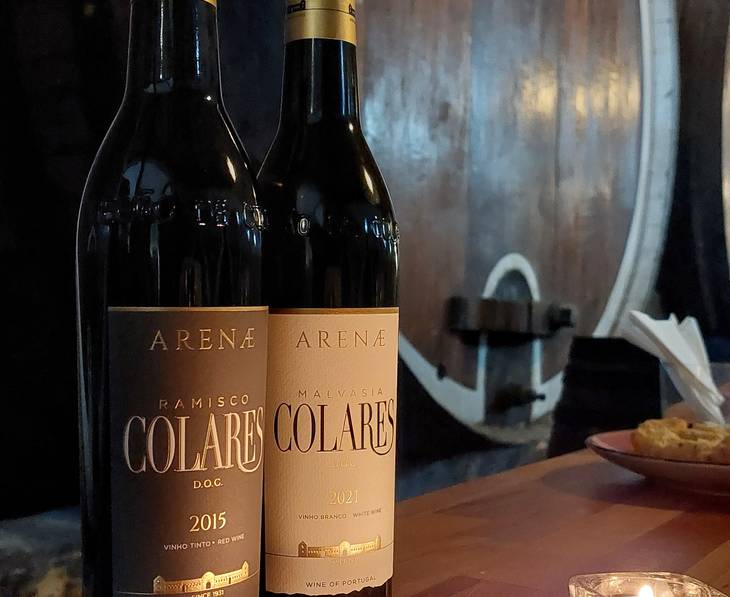
You can’t explore this coast without tasting the wines of Colares, one of the rarest and most remarkable wine regions in the world. Just inland from the cliffs near Sintra, the vines grow ungrafted in deep Atlantic sand — survivors of the phylloxera blight that wiped out most of Europe’s vineyards in the 19th century. The reds, made from the local Ramisco grape, are firm and elegant with bright acidity and notes of red fruit and salt-tinged minerality, while the whites, from Malvasia, are fresh, aromatic and faintly saline. You can taste them close to the source at the historic Adega Regional de Colares cooperative, right on the walking route.
Ginjinha
Lisbon’s best-loved tipple is ginjinha, a sweet, deep-red liqueur made by steeping sour morello cherries in spirit and sugar. Served in a small glass, often with a couple of boozy cherries in the bottom, it is traditionally knocked back standing up at tiny hole-in-the-wall bars around the city. You’ll find historic ginjinha spots near Rossio in the heart of Lisbon, and a glass makes the perfect end to an afternoon of exploring.

Ginjinha the sweet, ruby-red cherry liqueur best enjoyed standing up at one of Lisbon’s tiny old ginjinha bars.
Bacalhau
Salted cod is a national obsession in Portugal and the Douro is no exception. The Portuguese are said to have 365 ways to prepare bacalhau, one for every day of the year. In the valley you will find it roasted, grilled, baked with cream and potatoes or shredded into crispy pastéis de bacalhau. It is on almost every menu.
Fresh Fish and Seafood
With the Atlantic on the doorstep, fresh fish and seafood are the signature of this coast. Grilled sardines, sea bass and bream come straight off the boats, while heartier appetites turn to arroz de marisco, a rich seafood rice cooked at the table. After a day on the clifftop trails, a plate of freshly grilled fish by the harbour in Cascais is exactly the kind of meal you want.
Lisbon Region Wines

Regional Cheeses and Cured Meats

Is the Lisbon & Sintra-Cascais Natural Park Vegan Friendly?
The vegan diet has become more and more popular throughout Europe in recent years, and you will find that there are plenty of vegan options available in most eateries. Lisbon, Cascais and Sintra in particular are very well served, with a wide choice of vegan and vegetarian restaurants and cafés. Each of the accommodations we work with at Hillwalk Tours have given us their guarantee that vegan breakfasts will be catered for once they have been informed. That being said, some of the quieter coastal and Serra de Sintra stretches of the trail may have more limited options, so we advise bringing certain items such as plant-based milk, nut butters or protein powders if you so choose.
In addition, the following apps show restaurants which offer vegetarian and/or vegan options:
Nearby Trails
There are various other trails available to you once you have completed the Lisbon & Sintra-Cascais Natural Park. Here are some other trails we offer and which form the larger Camino de Santiago walking route network:
- Rota Vicentina (Fishermen’s Trail)
- Porto & Douro Valley (Signature Trails)
- Algarve Coastal Trails
- Costa Verde & Minho River Trails
- Camino Portuguese (Traditional Central Route)
- Camino Portuguese (Coastal Route)
Lisbon & Sintra-Cascais Natural Park Tips and FAQs
Probably one of the most common questions asked when planning any hiking holiday is, what should I pack? Once you have fully booked your Hillwalk Tours hiking holiday you will receive a detailed recommended equipment list inside your Walking Pack. For those who are still unsure of what to bring, here are some of the things we advise you bring with you on the Lisbon & Sintra-Cascais Natural Park trails. Waterproof clothing, a fleece and other warm layers, a breathable base layer, light comfortable trousers, wicking socks, suitable hiking boots, a backpack or rucksack, a hat and gloves, a first aid kit and foil blanket, a whistle and torch, sunscreen and insect repellent, a refillable water bottle (the clifftop and Serra de Sintra climbs can be steep and shade is limited in places), a mobile phone, and a plug adapter for Type F standard EU sockets. The Lisbon and Cascais coast can be very warm and sunny from late spring through to autumn, so lightweight breathable clothing is essential. However, the Atlantic clifftops are often breezy and the Serra de Sintra has its own cooler, damper and mistier microclimate, so packing layers is a smart idea.
For more on what to pack visit https://www.hillwalktours.com/faqs/#dont-forget
If you are thinking of bringing your four-legged friend with you it is important to consider a few things. The trails pass through busy city streets, coastal resorts, villages and a protected natural park where dogs may not always be welcome. The Portuguese summer and early autumn can also be very hot, which could be uncomfortable for your dog, particularly on the exposed clifftop paths and the steep climbs around Sintra. The majority of accommodation providers on this trail do not accept pets of any kind. Due to this, it is not possible to bring any pets on a Hillwalk Tours hiking holiday. It might be more enjoyable for both you and your dog to make alternative arrangements and save this one for yourself.
The Lisbon & Sintra-Cascais Natural Park is generally considered a very safe route. The trails pass through a bustling capital city, coastal towns, villages and a popular natural park, so you are never far from civilisation. Mobile coverage is good in the towns and along the coast, though it can be patchy in some of the more remote stretches of the Serra de Sintra. If you experience any difficulty or an emergency of any level you should phone the Portuguese emergency services on 112. For those who have fully booked their Hillwalk Tours hiking holiday we provide 24/7 on-call support to all of our customers, and you will also receive detailed safety information in your Walking Pack.
Absolutely. Solo hikers are more than welcome on this trail, and the Lisbon & Sintra-Cascais Natural Park is a wonderful place to explore at your own pace. The self-guided format means you have complete freedom over your day, and the cities, coastal towns and villages along the route are friendly and welcoming. Due to limited availability of single rooms in some locations it is worth booking early. A single supplement charge also applies for solo travellers requiring their own room.
The Lisbon & Sintra-Cascais Natural Park combines flat city and coastal walking with the steeper, forested hills of the Serra de Sintra, so while many stages are fairly gentle, several walks involve some short but steep climbs and descents. The biggest single climb is around 640m on the most demanding Sintra day, while the steep Vila Sassetti trail climbs sharply up from the town centre to the gates of Pena Park. We recommend this tour for hikers who are reasonably fit and comfortable with varied gradients. That said, our range of Gentle and Moderate itineraries allows you to choose daily distances that suit your fitness level. If you can comfortably walk 10 to 15km on hilly terrain you will be well prepared for the Gentle tours. For the Moderate tours, aim for 15 to 20km with some elevation. Building in some hill walking before your trip will make the experience much more enjoyable.
Tours on the Lisbon & Sintra-Cascais Natural Park run from March through to November. You can start your tour on any day within this period. There are no fixed departure dates, so you have the freedom to begin whenever it suits you. Check the Hillwalk Tours website for the most up to date availability.
Our 7-Day tours include 6 nights of accommodation. Specifically the first 6 nights on your hiking tour. Your tour finishes on the seventh day when you check out of your last accommodation. These 7-Day tours include 5 days of hiking. The first and last days of all our hiking tours are travel days used to transfer to and from the town where your hike will begin and end. If you would like to hike for 7 days simply select one of our 9-Day tours.


Hillwalk Tours
About Us
Hillwalk Tours is an award-winning walking tour operator which specialise in self-guided walking holidays in Ireland, Scotland, England, Wales, Portugal and along a number of Camino trails in Spain. Our goal is to create happy experiences for all of our customers, suppliers & staff.
Fill out the form below with any questions you may have on the and we will get back to you promptly.
Follow us on our social media platforms
Customer Reviews
Leave No Trace
We like to walk in nature and since you are reading this – we believe you do too! It is important to ensure that our impact on the environment is limited so that hikers can enjoy the same view after us. The rule applies: when you leave, make sure that nature looks the same as when you arrived or simply put “leave no trace.” As more and more people take to the great outdoors, our collective mark on the environment increases.
What does this mean in reality? Of course, do not leave any rubbish or waste behind. Do not collect stones, flowers, or other “souvenirs”. Don’t carve your name on a tree or break branches… I think you get the drift. It is imperative for walkers to play their part in making sure litter, damage to vegetation and all forms of pollution are limited.
Noise can also be a form of pollution. Whoever walks through a forest talking and laughing loudly, for example, ruins the peace and quiet of other walkers, who can no longer hear the birds. The same goes for cell phones that suddenly start ringing. Keep the volume down and respect your surroundings. Ultimately, the point is to ensure that as many people as possible can enjoy walking through nature. So that applies to you, but also to those who tread the path after you.
Hillwalk Tours proudly supports sustainable tourism and loves the countryside as it is – wild, peaceful and clean. We are proud to support the “Leave No Trace” initiative that aims to preserve the natural beauty of each nations countryside where we offer hiking holidays. We try to create happy experiences for our accommodation too, and the restaurants, shops and taxi companies that serve our walkers. These are often small businesses located in isolated areas that have been left behind by urban migration and a lack of investment in rural regions. Their warm hospitality and friendly welcomes epitomise the magic of a Hillwalk Tour and we’re dedicated to helping keep these rural communities alive.
The Benefits of Hiking
In recent years, walking and hiking outdoors has been widely reported to have numerous physical and mental health benefits. The following are examples of some of these benefits:
Improve strength and fitness
- Weight loss
- Muscle gain
- Improve metabolism
- Improve digestion
- Better quality sleep
- Increase in Vitamin D
- Improve discipline
- Sense of achievement
- Living in the present moment
Hiking Equipment List
For a more in-depth list of recommended hiking equipment list, click here.
Make A Booking
Are you ready for your Lisbon & Sintra-Cascais Natural Park adventure? Get started by simply filling out the booking form below!

